

Faculty Perspective: Dr. Sharon Sanz Simon – Plasma AT(N) Biomarkers in Latin American Populations: A Step Forward for Inclusive Neurodegenerative Research

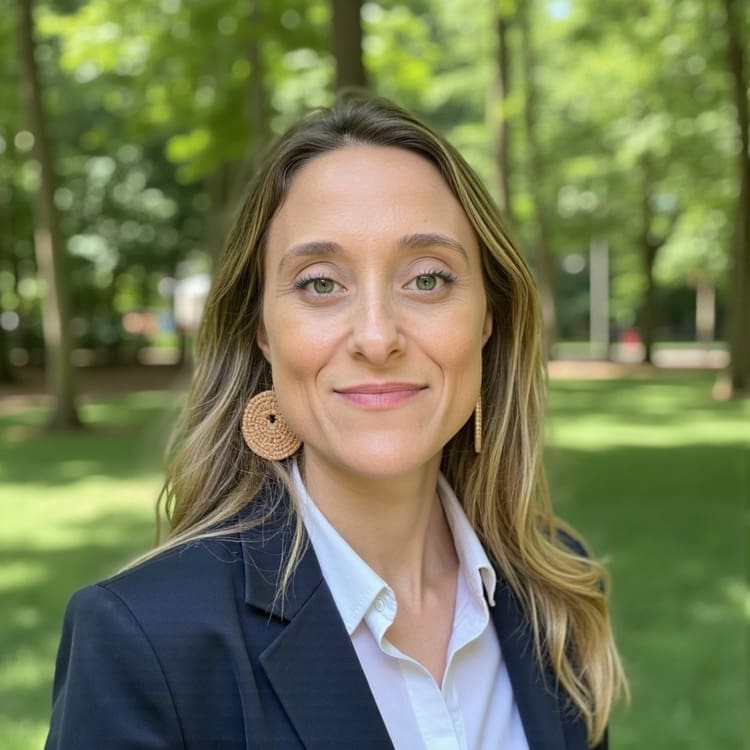
The recent study in Nature Aging validating plasma AT(N) biomarkers for distinguishing Alzheimer’s disease (AD) and frontotemporal lobar degeneration (FTLD) in a diverse Latin American cohort marks a meaningful advance in inclusive neurodegenerative research. In this commentary, Dr. Sharon Sanz Simon, provides her perspective on this study, emphasizing equity, accessibility, and the need for contextualized validation in diverse populations, including Latin American and Brazilian communities. Dr. Sanz Simon is an Assistant Professor of Psychiatry at Rutgers New Jersey Medical School and a core member of Rutgers Brain Health Institute (BHI) and the Krieger Klein Alzheimer’s Disease and Related Disorders Research Center in BHI.
Introduction: Validating Blood-Based Biomarkers in an Underrepresented Region
The core focus of this study is validating plasma AT(N) biomarkers for distinguishing AD and FTLD in a diverse Latin American cohort. Testing these biomarkers in genetically and environmentally diverse populations is significant because science is not only about discoveries, but also about how discoveries are accessible and scalable across different populations and sociocultural contexts. To really advance dementia prevention, early diagnosis, and care globally, scientists need to test AT(N) blood-based (plasma) biomarkers in heterogeneous populations and validate their use in different contexts. This effort is also key to distinguishing different neurodegenerative diseases such as AD and FTLD. In the case of Latin America, one of the most genetically and culturally diverse regions in the world, validating the plasma biomarkers advances valid regional cutoffs, increasing early diagnosis accuracy and disease monitoring. In regions like Latin America—facing rising dementia prevalence and limited specialist access—a simple blood test—preferentially interpreted within a clinical and neuroimaging context—can meaningfully advance low-cost early diagnosis and better care.
Summary of Key Findings: Strong Classification Performance with Multimodal Gains
The article brings good news about how plasma AT(N) biomarkers can classify AD and FTLD in Latin America. First, there were significantly different AT(N) plasma levels across AD, FTLD, and cognitively normal (CN) participants in a large sample (N=605). Second, the directions were consistent: as would be expected, both Alzheimer’s and FTLD were associated with reduced plasma Aβ42/Aβ40 ratios and elevated p-tau217, p-tau181, and NfL compared with controls. Third, clear distinctions emerged between AD and FTLD: p-tau217 levels were higher in Alzheimer’s than in FTLD, consistent with its specificity for amyloid and tau pathology. By contrast, NfL—a marker of neuroaxonal injury—was more elevated in FTLD, reflecting its typical faster and more diffuse neurodegenerative course. When using only blood-based biomarkers, classification models achieved ROC-AUC values of 83% for AD and 88% for FTLD, which is already impressive. However, as would be expected, the accuracy of the classification improved when blood tests were combined with disease-specific neuroimaging patterns and cognitive measures, reaching 89% for AD and 95% for FTLD. Reinforcing these results, the biomarker levels were strongly associated with deficits in executive function, memory, and global cognition, reflecting the specific neuroanatomical changes of each disease (e.g., temporoparietal for AD vs. orbito-insular for FTLD). Based on her expertise, Dr. Sanz Simon finds the study’s approach and results (e.g., p-tau217 strength for AD, NfL for FTLD, consistency across countries) convincing. An important door was opened with this initial validation, but more validation steps are needed. The study addresses important gaps and provides a clinically relevant cutoff that can advance clinical care in Latin America at a lower cost. This has direct implications for public health. However, the study could not account for many cultural/social differences within each of the countries analyzed (i.e., Chile, Argentina, Brazil, Colombia, Peru, and Mexico). Although the study ran sensitivity analyses to confirm that these results were robust across age, sex, education, and comorbidity profiles, there are limitations that have to be considered and carefully analyzed.

Significance to Neuroscience and Brain Health: Towards Precision and Inclusion
Validating these blood-based biomarkers in a multinational Latin American cohort with high Amerindian ancestry offers a novel or important perspective on AD and FTLD pathology in diverse populations compared to traditional North American/European-focused studies. Yes, definitely. It generalized a result to an underrepresented group. This shows us that we are moving in the right direction as a field without “forgetting” part of the population. This is not only about democratizing science and making it more accessible, but also about building a better science for all, with more sensitivity and specificity to different populations. This also helps the dementia field to move from a “one-size-fits-all” approach to a precision medicine approach, which considers the individual differences, such as socio-cultural contexts, genetics, biology, etc. The results added critical new data showing that the blood-based biomarkers can differentiate two prevalent neurodegenerative processes underlying AD and FTLD, generalizing the available data with an underrepresented population. This can be a model for other regions in the world on how to harmonize data across different countries and regions. It is worth mentioning that this data was based on a Latin America consortium – ReDLat (Multi-Partner Consortium to Expand Dementia Research in Latin America), showing how crucial regional efforts are to integrate databases and perspectives to advance research and care regionally. This seems particularly relevant in the global south, which frequently has lower resources than the global north.
Clinical and Public Relevance: Advancing Equitable Diagnosis in Resource-Limited Settings
Blood-based AT(N) testing, especially when combined with imaging and cognition, could improve dementia diagnosis in resource-limited Latin American settings. Yes, for sure. This is a way to democratize evidence-based medicine in a context with limited specialist access when a simple blood test can advance early diagnosis, differential diagnosis, disease monitoring, and care—but has always to be interpreted within a clinical context (preferably with neuroimaging). These findings are a huge first step to advance accessible, low-cost blood exams with valid cutoffs in a context with limited resources. However, more steps are necessary, especially with longitudinal data and considering sociocultural differences among and within Latin American countries. These results are a big step toward advancing diagnosis equity: they may impact care for those at higher risk and lower access, promote inclusion of diverse populations in clinical trials, and facilitate disease monitoring and health education in the population.
Future Directions and Conclusion: Building on This Foundational Step
The study is a first step, not a final step to a definitive cutoff. The cross-sectional design limits the ability to capture disease progression and temporal changes in biomarker trajectories, which is key given the dynamic influence of exposome factors (social and environmental) across Latin America. Another challenge is the sparse reporting of individual comorbidities (collapsed into a binary variable – present/absent), which is a simplification when we think about vascular disease, lifestyle, and other risk factors for neurodegenerative and dementia. Finally, the considerable genetic, environmental, and sociocultural heterogeneity in Latin America is not represented in the sample as its ancestry is predominantly Amerindian—and may not represent the Latin America population. The next key step is to continue this line of research in a longitudinal design, over a large period of time to confirm this initial cross-sectional data. Also, it is key to integrate with primary-care—not only the blood test but aging/dementia training to primary care physicians, so they can integrate the blood tests with a clinical perspective. Critically, investigating region-specific cutoffs by country and by demographics is relevant as, for instance, cultural/lifestyle and educational experiences may modify the risk for dementia. Another relevant aspect to be invested in is integrating better dementia diagnosis and care into brain health education and science communication to the general public. As people have more access to blood tests that advance earlier diagnosis for dementia, several lifestyle changes are relevant to attenuate risks and disease progression.
Sources:
- Caviedes, A., Cabral-Miranda, F., Orellana, P. et al. Blood-based AT(N) biomarkers for Alzheimer’s disease and frontotemporal lobar degeneration in Latin America. Nat Aging 6, 430–444 (2026). https://doi.org/10.1038/s43587-025-01061-3
- https://cadlas.org/sharon-sanz-simon-phd/
- Herbert and Jacqueline Krieger Klein Alzheimer’s Research Center, Rutgers Brain Health Institute.
