

Faculty from Rutgers Business School Use MRI Scanner to Identify Empathy That Might Be Key to Addressing the Effects of Toxic Workplace
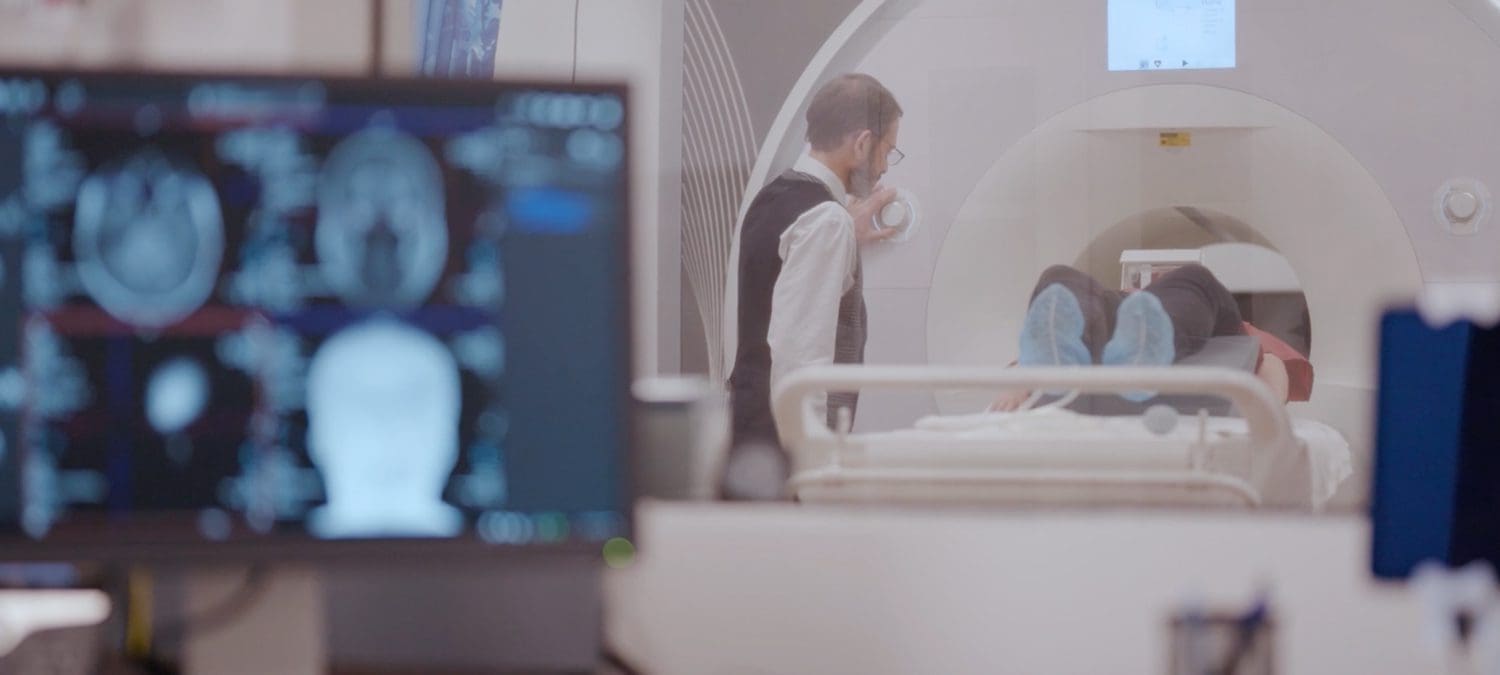
The Center for Advanced Human Brain Imaging Research (CAHBIR) in Rutgers Brain Health Institute (BHI), supports high-quality human neuroscience research using state-of-the-art neuroimaging techniques. CAHBIR houses a research-dedicated 3 Tesla Siemens Prisma MRI scanner and provides technical support for task design, sequence optimization, data analysis, pilot scanning programs, and workshops. CAHBIR resources and expertise are available to investigators across Rutgers, including from faculty in schools who typically don’t use a MRI scanner for their research studies.
An example of such “out-of-the-box” use of the MRI scanner is a collaboration between Rutgers Business School (RBS) researchers and CAHBIR to study brain responses in third-party observers witnessing abusive supervision. While MRI is most often used for clinical or basic cognitive neuroscience, the center’s pilot grant program and technical assistance allowed faculty in RBS to adapt it for real-time observation of emotional and moral processes in a workplace context.
“How Third-Party Employees Respond to Abusive Supervision toward Coworkers”
The project was funded through a BHI/CAHBIR mini pilot grant for Rutgers New Brunswick faculty titled “How Third-Party Employees Respond to Abusive Supervision toward Coworkers” (2022), with Dr. Danni Wang (Associate Professor of Management and Global Business) and Dr. Chao C. Chen (Distinguished Professor at Rutgers Business School) as principal investigators. Nguyen Pham, Ph.D. candidate in Organization Management and student of Dr. Wang, contributed substantially to data collection, analysis, and implementation of the MRI paradigm. Participants watched video scenarios of hostile supervisory interactions during scanning, allowing direct measurement of neural activity that complements traditional behavioral or survey-based approaches.
Meet the Research Team



Nguyen Pham, who was closely involved in executing the study, explained the value of the neuroimaging approach.
“We often think of workplace abuse as something that affects only the target. What this collaboration allowed us to do was actually see what happens in the brains of the people watching abuse unfold. fMRI gave us a sort of window into the potential emotional and moral processes that shape whether someone might stand up to abusers, or stand down.” – Nguyen Pham, Ph.D. candidate in Organization Management at Rutgers Business School.
In a first-time collaboration between organizational scholars at RBS and CAHBIR, Pham and colleagues used functional MRI (fMRI) to examine what happens in the brain when individuals witness abusive supervision, which is defined as the extent to which supervisors engage in the sustained display of hostile verbal and nonverbal behaviors by organizational scholars. While most workplace abuse research focuses on direct victims, this study shifts attention to third-party observers, the coworkers who decide whether to speak up, offer support, or remain silent. As it often is in organizations, fellow coworkers help create the culture of the workplace, and these third parties have the power to reinforce or resist toxic norms. Understanding their emotional and neural processes helps organizations move from passive bystander cultures to active ethical communities.
Our findings show that witnessing abusive leadership first activates affective-motivational brain regions associated with emotional salience, anger, and alarm, including the insula and cingulate cortex. As observers move from watching the interaction to evaluating it, neural activity shifts toward regions linked to empathy, social cognition, and moral reasoning, such as the superior temporal gyrus, fusiform gyrus, and anterior cingulate cortex. This pattern suggests that third-party reactions unfold in stages, beginning with emotional arousal and transitioning into reflective moral judgment.
Importantly, empathy emerged as the strongest predictor of constructive workplace responses. Although anger was associated with action, particularly constructive criticism, empathic concern was consistently more powerful in predicting supportive behaviors and intentions to stand up. These results highlight empathy as a central emotional driver of ethical bystander behavior and suggest that organizations seeking to reduce toxic leadership may benefit more from cultivating empathic concern than from simply amplifying outrage. By revealing the neural dynamics underlying third-party responses to abuse, this research offers new insight into how ethical workplace cultures can be strengthened from within.
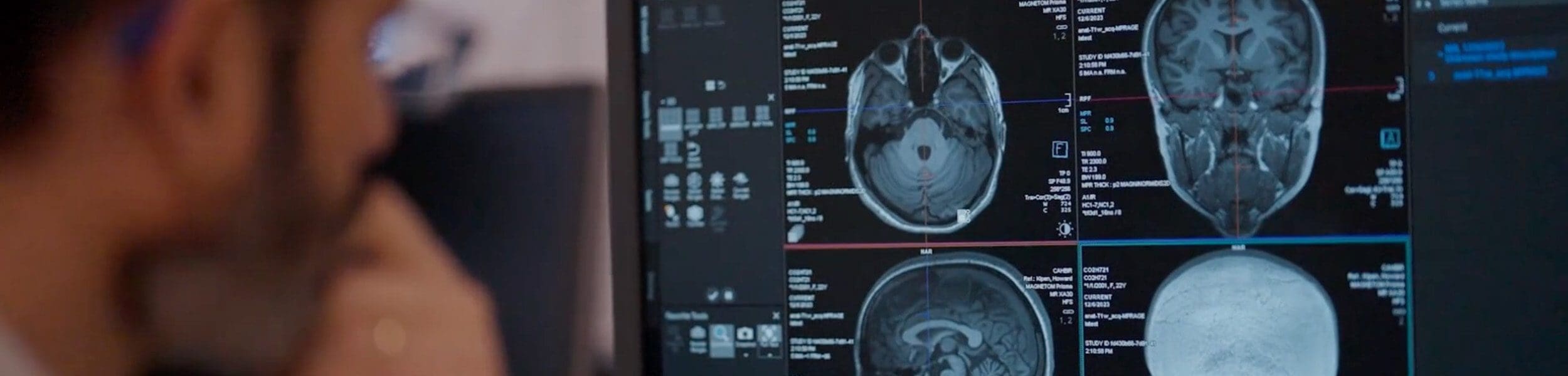
CAHBIR’s contributions via scanner time, technical guidance for integrating behavioral tasks into imaging protocols, analysis support, and pilot funding through the BHI were key to making this interdisciplinary work feasible. This project illustrates how access to advanced neuroimaging can extend beyond core neuroscience to inform questions in organizational behavior and ethics.
CAHBIR exemplifies the BHI vision: When state-of-the-art brain imaging is accessible across disciplines, unexpected, high-impact breakthroughs emerge, connecting neuroscience to pressing real-world issues like fostering ethical workplaces.
Center for Advanced Human Brain Imaging Research
Discover more stories of how CAHBIR, as a Rutgers Brain Health Institute center, is powering interdisciplinary neuroimaging innovations across diverse fields.
