

How RUCARES Helped Shape a Young Researcher’s Path
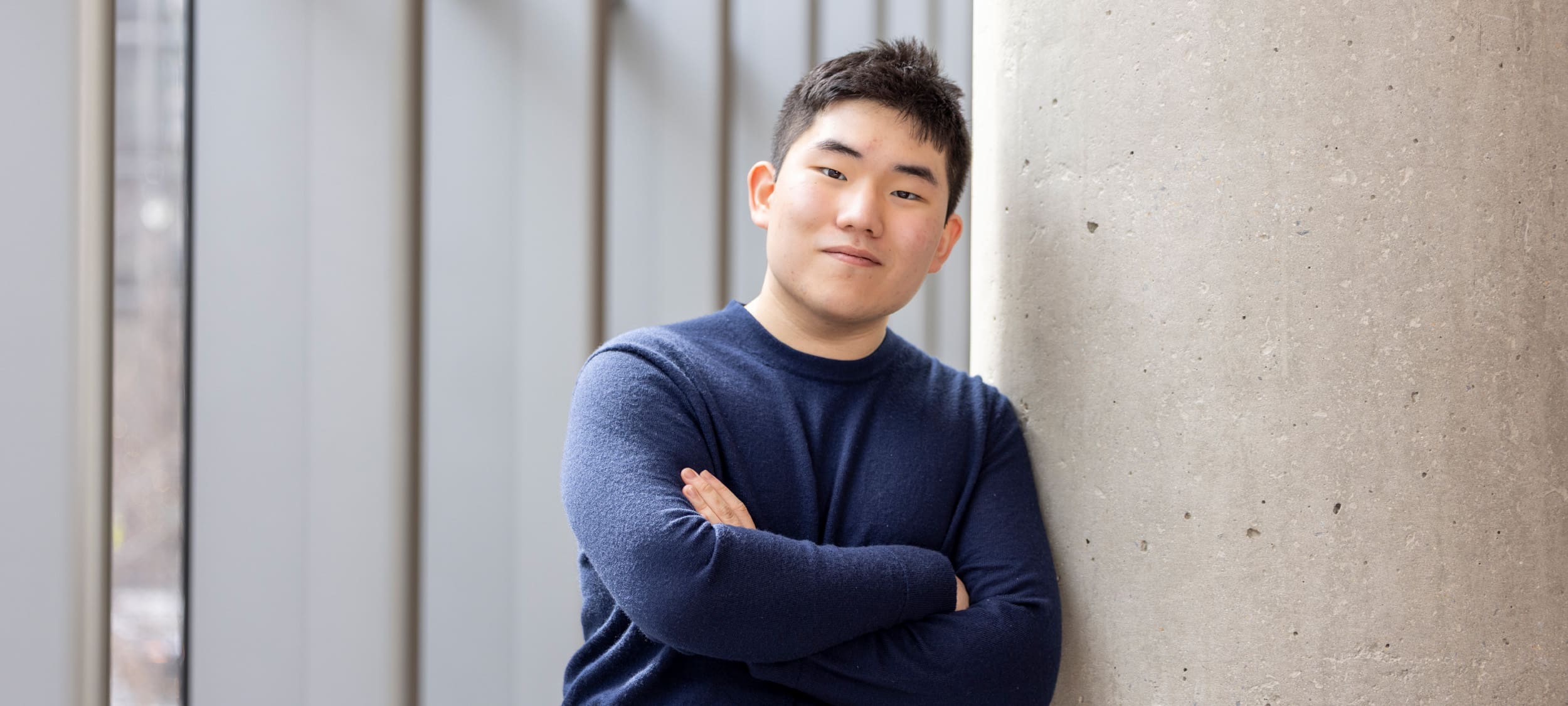
When Edward Kang began his Senior Experience Program at Rutgers Center for Autism Research, Education and Services (RUCARES), a center within the Rutgers Brain Health Institute (BHI), he was already deep into a research project of his own. What he found there gave that work a different kind of clarity.
Kang, a senior at Bergen County Academies who will attend MIT this fall, recently earned second place and a $175,000 award in the 2026 Regeneron Science Talent Search, the nation’s oldest and most prestigious science and math competition for high school seniors. His project, RetinaMind, used retinal images to train AI models on subtle patterns linked to autism spectrum disorder (ASD) and Attention-Deficit/Hyperactivity Disorder (ADHD), while also exploring gene changes through retinal cell models.
At the same time, his experience at RUCARES gave him the opportunity to observe autism research and treatment in a real-world setting, connecting his technical work to the complexity of care.
“My volunteer internship at RUCARES continues to be a special honor,” Kang said. “Since last fall, I have had the opportunity to actually see the autism treatment practices I had only read about in articles before. The combination of qualitative, human-driven therapies and quantitative data collection amazes me.”
That perspective became especially important as his project evolved. What began as an attempt to improve an existing diagnostic model quickly expanded into a broader set of scientific questions.
“My project started back in 2023 when I came across a research paper that pioneered the use of retinal images to diagnose ASD,” he said. “I began with the simple goal of trying to improve this existing model to be more accurate and powerful, but my project has grown into something far more complex.”
The more he worked, the more he found himself asking not only how such a model performs, but what it may be capturing biologically and how it could be made more useful in practice.
At RUCARES, those questions took on added depth. Seeing autism treatment firsthand helped Kang think beyond detection alone and more carefully about what diagnostic tools should make possible for patients and families.
“Getting to see first-hand how personalized treatments can be also gave me direction for my research project,” Kang said, “helping me realize that future diagnostic tools for autism should aim to not only identify the disorder, but also distinguish between various subtypes of patients that could guide treatment.”
That kind of thinking sits naturally within the work of RUCARES, where research, education, and services are closely connected. As part of Rutgers Brain Health Institute, the center helps advance autism research while remaining attentive to diagnosis, treatment, and support across the lifespan.
For Kang, one of the most meaningful parts of the experience was the chance to learn in that environment and from the people working in it.
“More than anything, though, I have had the privilege of connecting and conversing with professionals in the field, who have warmly shared their knowledge and excitement for their work,” he said. “RUCARES has fueled and validated my love for neuroscience.”
He also spoke candidly about what it means to stay with difficult questions long enough for better ones to emerge.
“Throughout my two years working on this project, I have answered many of my initial curiosities; but the truth is, I have way more questions now than I started with,” Kang said. “That can be frustrating to think about sometimes, but I believe true scientific spirit comes from tackling those questions head on, and loving every step of the process.”
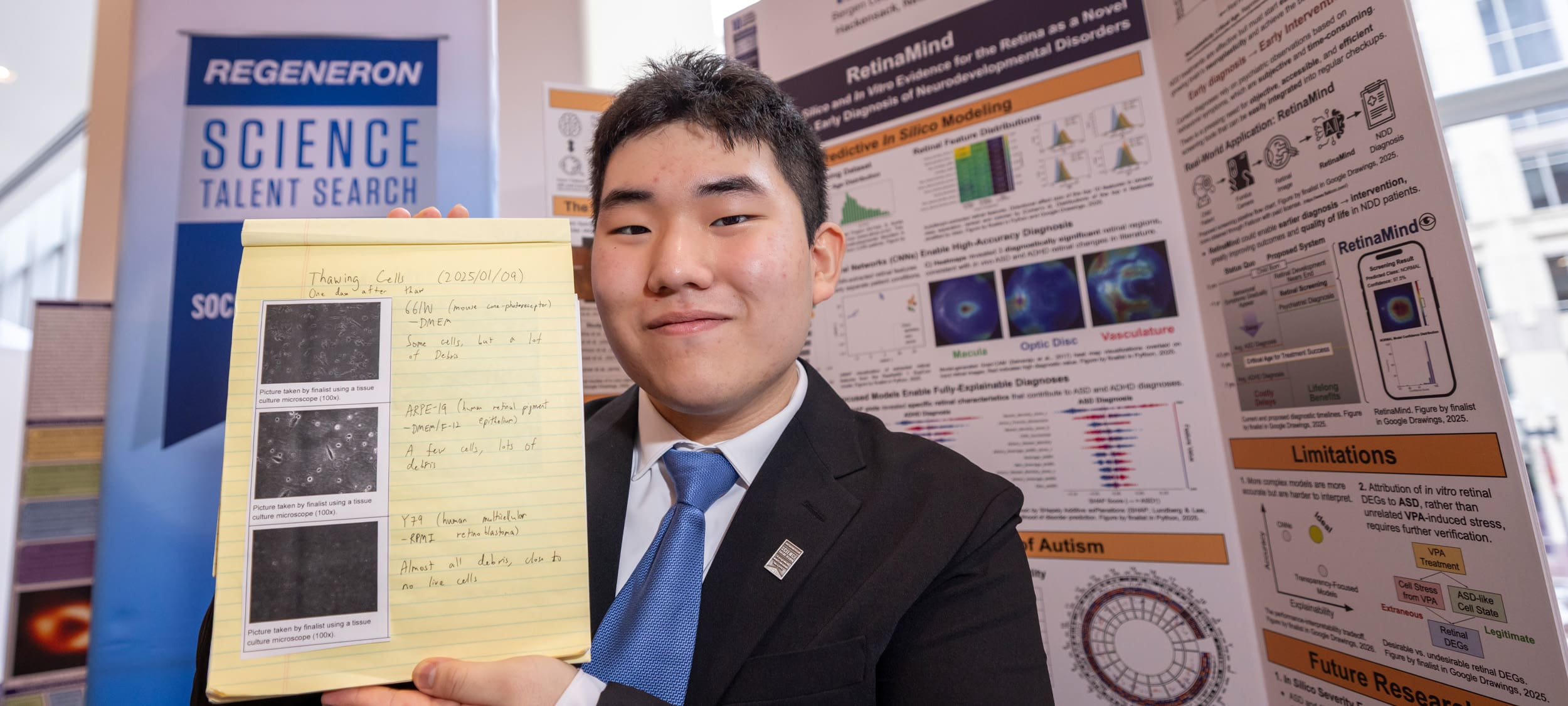
Presenting the work, he said, has often been the most rewarding part.
“Over the last two years I’ve often found myself working obsessively in the lab, staring into microscopes and spreadsheets,” he said, “but presenting my work has often been the most validating and rewarding part of the process, as it gives me perspective on what I’m doing and why I do it.”
Those conversations have mattered most when they involved families affected by autism or ADHD.
“I am always most grateful when I get to discuss my work with families affected by ASD or ADHD,” he said. “The thought of making some contribution to their lives is my strongest motivation.”
This fall, Kang will begin the next stage of his academic career at MIT. His time at RUCARES will remain part of that story: a place where research questions met clinical reality, and where curiosity was sharpened by proximity to the people such work is ultimately meant to serve.
Support Research and Opportunity
Experiences like Edward Kang’s take shape in research communities where discovery, mentorship, and real-world relevance are closely connected. Support for Rutgers Brain Health Institute helps sustain the centers, people, and environments that make that work possible.
