

Dr. Mara Getz Sheftel to Highlight Social Disconnection and Cognitive Vulnerability in Older Adults | 2026 KKARC Symposium

How do loneliness and social isolation shape the risk of cognitive decline in aging populations? Dr. Mara Getz Sheftel will present new research on the risk profiles of social disconnection among U.S. older adults at the Herbert and Jacqueline Krieger Klein Alzheimer’s Research Center (KKARC) 2026 Symposium on March 24, 2026. Her talk, “Risk Profiles of Social Disconnection in U.S. Older Adults: A Data-Driven Approach to Identifying Cognitive Vulnerability from Loneliness and Social Isolation,” explores how different patterns of social disconnection may contribute to cognitive decline and Alzheimer’s disease and related dementias (AD/ADRD). Using a person-centered, data-driven approach with data from a new Rutgers-based cohort, her work aims to identify distinct social risk profiles that could guide targeted prevention strategies to reduce dementia risk. Learn More and Register Now
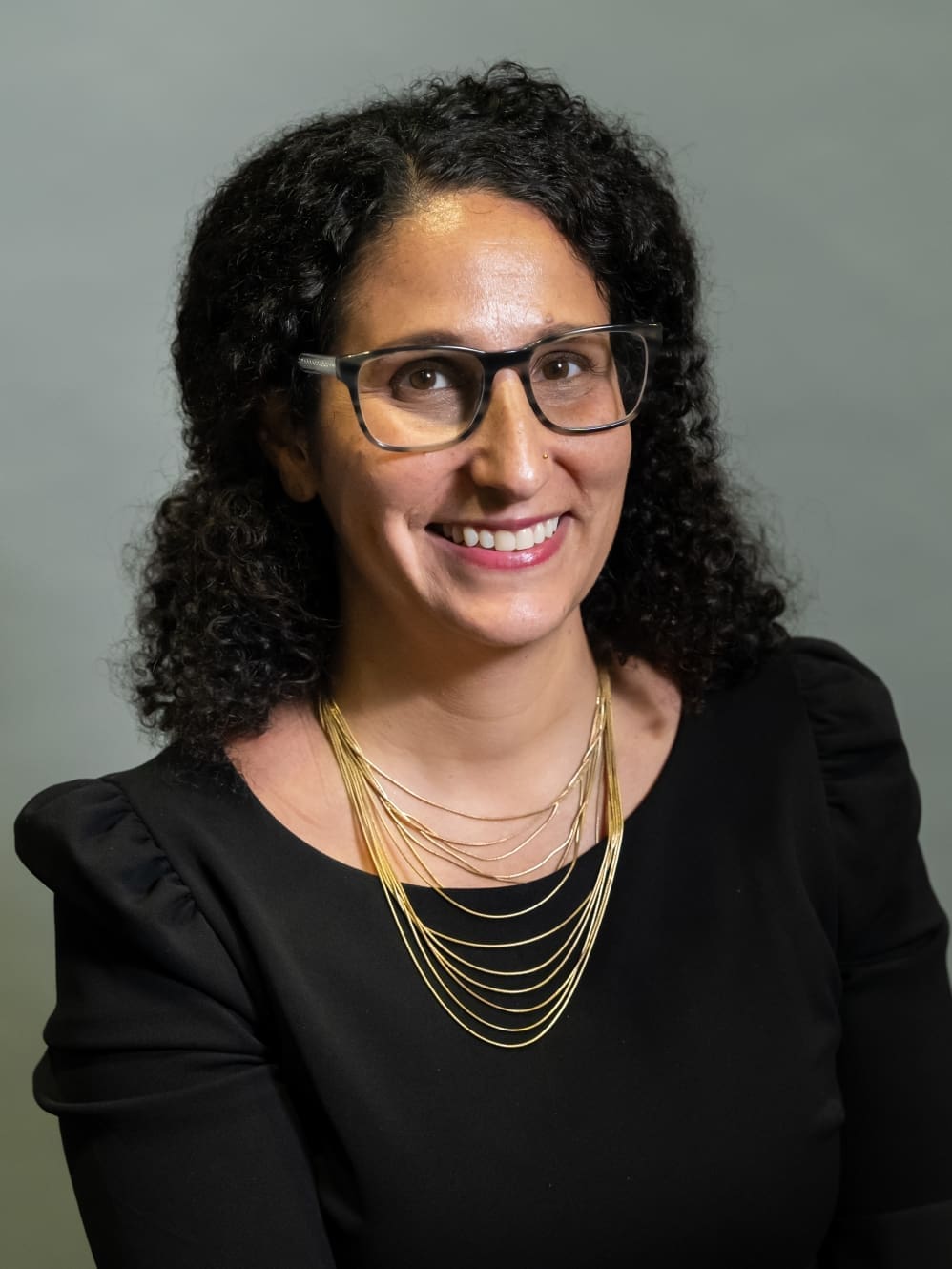
Dr. Mara Getz Sheftel
Instructor, Department of Health Behavior, Society, and Policy, Rutgers School of Public Health
Member of the Rutgers University Institute for Health, Health Policy and Aging
Scientific leadership team of the New Jersey Population Health Cohort Study and the Center for State Health Policy
Dr. Sheftel is a sociologist and demographer who uses a life course perspective to study new drivers of stratification for aging adults in three domains: (1) distinct structural and social determinants of health, (2) rising socioeconomic stratification and occupational segregation, and (3) changing family structure and intergenerational support. Currently, Dr. Getz Sheftel is a co-investigator on a National Institute on Aging (NIA) R01 (PI: Jennifer Van Hook, Penn State) investigating how immigrant legal status exposures impact the health and wellbeing of older (50+) Latino immigrants. Dr. Sheftel has an interdisciplinary background spanning sociology, demography, public policy and international studies and her research is aimed at informing policies and services to improve population health and functioning for older adults.
Talk Title: “Risk Profiles of Social Disconnection in U.S. Older Adults: A Data Driven Approach to Identifying Cognitive Vulnerability from Loneliness and Social Isolation”
Background:
Loneliness and social isolation are distinct but interrelated forms of social disconnection that are leading modifiable risk factors for cognitive aging and Alzheimer’s disease and related dementias (AD/ADRD). Robust evidence links loneliness to faster cognitive decline and higher incident dementia risk, while social isolation independently predicts cognitive impairment and ADRD (Donovan et al., 2017; Livingston et al., 2024; Luchetti et al., 2024; Kuiper et al., 2015; Shen et al., 2022; Sommerlad et al., 2023). Yet most studies examine these constructs separately or examine the relative importance of one compared to another in relation to cognition, obscuring how specific combinations may confer compounded risk. We leverage data from a new Rutgers-based cohort and employ a person-centered, data-driven approach to identify multidimensional risk profiles of social disconnection that can inform precision prevention for cognitive decline and AD/ADRD.
Methods:
We analyzed adults aged ≥50 in the New Jersey Population Health Cohort (NJHealth; 2023–2026) (Cantor et al., 2025). Indicators included two measures of social isolation (living alone; small social network) and three R-UCLA loneliness items (lack of companionship, feeling left out, feeling isolated), dichotomized following prior work (Hughes et al., 2004; Cornwell et al., 2009). We estimated 2–4 class latent class analysis (LCA) models and selected the optimal solution based on information criteria, entropy, fit tests, class size, and theoretical and substantive interpretability. Sociodemographic correlates were compared across classes using the Bolck, Croon, Hagenaars (BCH) three-step approach to preserve the unconditional class solution.
Results:
Among 1,463 older adults (mean age 66.8; 35% male), LCA supported a four-class solution with distinct configurations of loneliness and isolation: (1) Low overall loneliness/low isolation (65%); (2) Exclusion-based loneliness/low isolation (17%), characterized by high probability of “feeling left out” but moderate other loneliness indicators and relatively intact structural contact; (3) Companionship-based loneliness/high isolation (3%), marked by high probability of living alone and high “lacking companionship”; and (4) High overall loneliness/high isolation (14%), with elevated probability across all loneliness items and greater structural isolation. Classes exhibited systematic sociodemographic patterning (e.g., Class 3 predominantly unmarried and White; Class 4 younger, more often non-Hispanic Black/Latino, and less often married), underscoring the need for tailored strategies.
Conclusions:
Older adults in a new cohort characterized by high educational attainment, reflecting levels expected for the future US population given secular increases in educational attainment, cluster into discrete social disconnection profiles that map onto different hypothesized pathways to cognitive decline and ADRD—social exclusion (Class 2), structural isolation and loss of companionship (Class 3), and compounded vulnerability (Class 4). These profiles suggest actionable, differentiated levers for AD/ADRD risk reduction: inclusion- and belonging-focused interventions (Class 2), contact- and engagement-building to reduce isolation (Class 3), and combined structural plus psychosocial approaches (Class 4). Embedding these profiles into public health screening and social prescribing may enhance dementia prevention efforts by aligning intervention type with the specific configuration of social disconnection (Livingston et al., 2024; Sommerlad et al., 2023). Future research will examine the direct association between these classes and cognitive aging.
Herbert and Jacqueline Krieger Klein Alzheimer’s Research Center 2026 Symposium
The Herbert and Jacqueline Krieger Klein Alzheimer’s Research Center Symposium (KKARC) in the Rutgers Brain Health Institute (BHI) will host its 2026 Symposium on March 24, 2026, at the Busch Student Center, Piscataway.
